As high-efficiency and compact heat exchange devices, plate heat exchangers outperform shell-and-tube heat exchangers in heat transfer efficiency, size, weight and maintainability, and are widely used in industrial production. This paper comprehensively introduces their working principles and core applications in refrigeration, HVAC, heating, metallurgy and petrochemical industries.
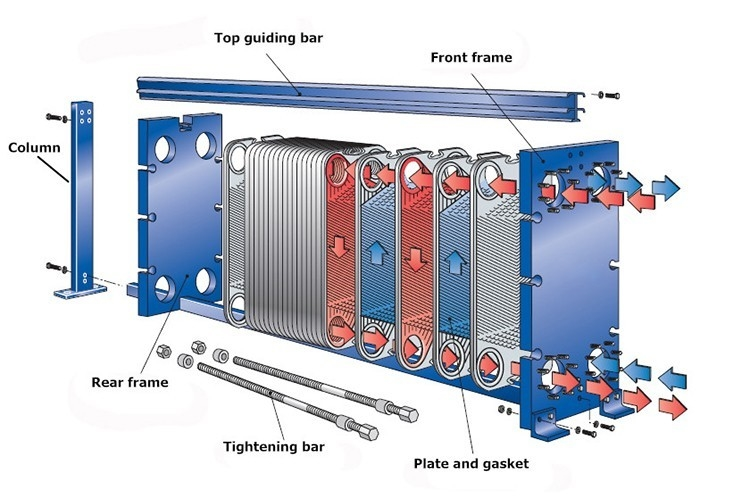
A plate heat exchanger consists of a set of rectangular metal plates clamped within a frame. Each plate is embossed with corrugated protrusions and equipped with distribution holes at four corners. Rubber or fluororubber gaskets are installed between adjacent plates to form narrow and elongated fluid channels. Plates are commonly made of stainless steel, titanium, Hastelloy and other materials. The frame is composed of fixed pressure plates, movable pressure plates, guide rods and other components to support and fasten the plate stack. According to different fluid inlet and outlet positions and plate hole layouts, various flow configurations can be assembled to realize parallel flow, counter flow and multi-pass heat exchange.
Plate heat exchangers are mainly divided into two types: frame-type (detachable) and brazed-type. The mainstream plate patterns include herringbone corrugated plates, horizontal flat corrugated plates and dimple plates.